Blog Archive
- November-2016
- December-2016
- January-2017
- March-2017
- Aprill-2017
- May-2017
- June-2017
- August-2017
- September-2017
- Aprill-2018
- July-2018
- September-2018
- October-2018
- March-2020
- Aprill-2020
- May-2020
- July-2020
- October-2022
- Aprill-2023
- October-2023
- February-2024
- Aprill-2024
- May-2024
- July-2024
- August-2024
- September-2024
- November-2024
- December-2024
- January-2025
- February-2025
- March-2025
- Aprill-2025
- May-2025
- June-2025
- July-2025
- August-2025
- September-2025
- March-2026
- Aprill-2026
- June-2026
- August-2026
Which bioactive compounds in coffee affect your blood vessels?

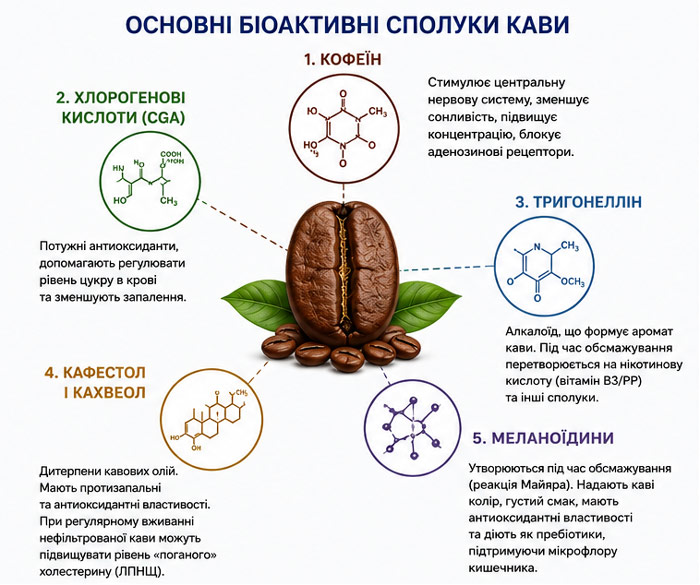
It's believed that coffee inevitably increases blood pressure and "narrows" blood vessels. In reality, it's more complex: coffee beans contain hundreds of chemical compounds, among which caffeine, chlorogenic acids, trigonelline, and coffee oils—cafestol and kahweol—are particularly important. It is the combination of these substances that largely determines the taste, aroma, and effects of coffee on the body, including vascular health.
Caffeine: More Than Just Energy
Caffeine is the main natural stimulant in coffee. It blocks adenosine receptors, a substance associated with fatigue, thereby reducing drowsiness and improving concentration.
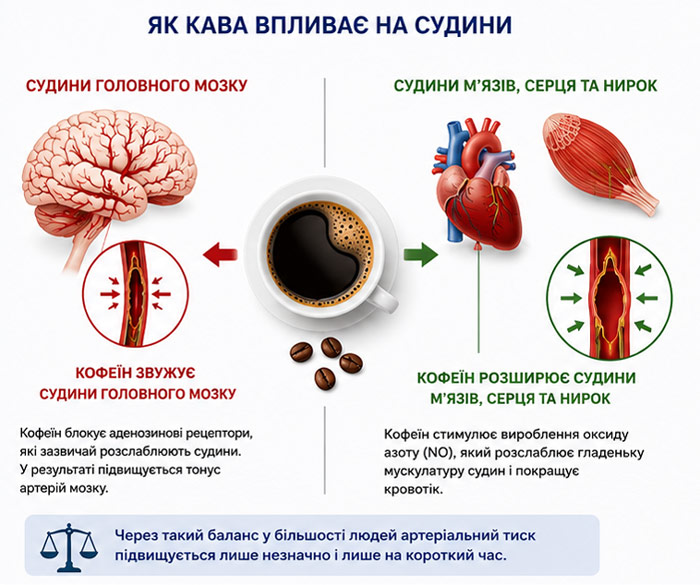
Interestingly, caffeine's effects on blood vessels vary. It can moderately constrict blood vessels in the brain, while it can promote increased blood flow in muscle, heart, and kidney vessels. Therefore, in most healthy people, blood pressure either remains unchanged or increases only slightly and briefly after a cup of coffee.
Chlorogenic acids and trigonelline
These substances are natural antioxidants and bioactive compounds in coffee. They help protect cells from oxidative stress and maintain normal function of the endothelium—the inner lining of blood vessels.
Studies show that chlorogenic acids and trigonelline can promote the production of nitric oxide (NO), which is involved in vascular relaxation. Because of this, their effects are considered potentially beneficial for blood vessels and blood pressure regulation.
Cafestol and kahweol: effects depend on brewing method
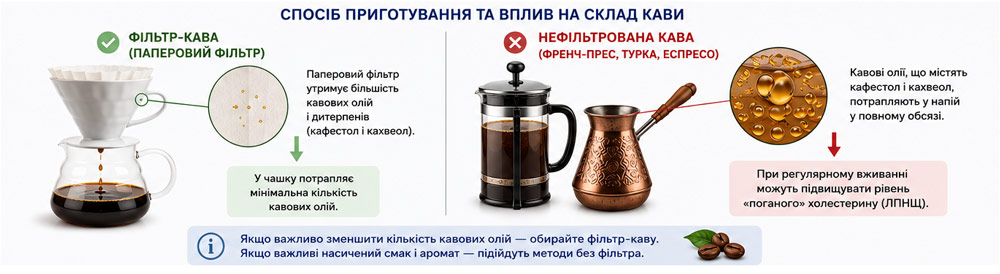
Coffee oils contain diterpenes—cafestol and kahweol. They have virtually no immediate effect on vascular tone, but regular consumption of unfiltered coffee (for example, brewed in a French press or Turkish coffee pot) can contribute to an increase in LDL cholesterol levels.
When using a paper filter, most of these compounds are retained, so filter coffee contains significantly less of them.
What's important to remember
Coffee doesn't have a purely "constrictive" or "dilating" effect on blood vessels. Caffeine can have different effects on blood vessels in different organs, and the antioxidants found in coffee beans can support vascular wall function. For most healthy adults, moderate coffee consumption does not typically lead to persistent increases in blood pressure.
If a person has hypertension, irregular heartbeats, or is highly sensitive to caffeine, it's best to discuss the amount of coffee and its preparation method with a doctor.