
Blog Archive
- November-2016
- December-2016
- January-2017
- March-2017
- Aprill-2017
- May-2017
- June-2017
- August-2017
- September-2017
- Aprill-2018
- July-2018
- September-2018
- October-2018
- March-2020
- Aprill-2020
- May-2020
- July-2020
- October-2022
- Aprill-2023
- October-2023
- February-2024
- Aprill-2024
- May-2024
- July-2024
- August-2024
- September-2024
- November-2024
- December-2024
- January-2025
- February-2025
- March-2025
- Aprill-2025
- May-2025
- June-2025
- July-2025
- August-2025
- September-2025
- March-2026
- Aprill-2026
- June-2026
- August-2026

Lots of people called to apply toothpaste to the entire length of their toothbrush bristles. This is how it is most often portrayed in advertising. Please note the recommendations of the World Health Organization (WHO) and international dental organizations: for effective dental care, a smaller mouth size is sufficient.
Correct dosing is especially important for children, and even in the early stages of the toothpaste, even in the early stages of brushing teeth. The recommended amount of fluoride mouth helps to immediately prevent caries and reduce the risk of excessive fluoride consumption.
Why is the strength of toothpaste important
Fluoride is one of the most important components of daily toothpastes. Its effectiveness in caries prevention is confirmed by numerical clinical studies. Fluoride remineralizes enamel, increases its resistance to acids and helps prevent the development of caries lesions.
At the same time, it is important for young children to control the volume of the mouth; regularly mixing large volumes of fluoride toothpaste can increase the risk of developing dental fluorosis during the formation of permanent teeth. teeth.
The WHO itself recommends vikorism fluoride toothpaste in a small amount, which is suitable for the age of a child.
What the correct thickness looks like
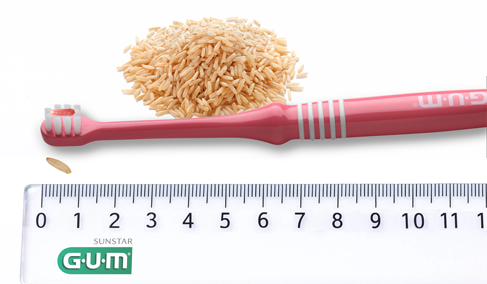
Up to 3 rocks - “grain of rice”
For babies and young children, it is recommended to apply a thin line of mouth. This quantity ensures the necessary preventive effect and also minimizes the number of mouths where the baby can be tampered with.
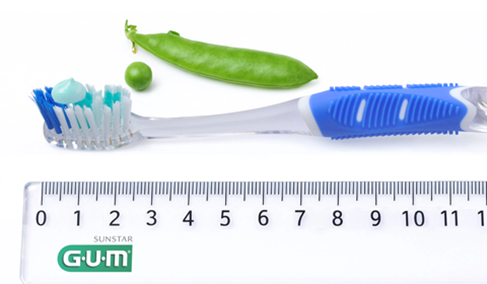
For 3 to 6 rocks - “pea”
In preschool age, the child has less control over the process of brushing teeth, but still requires assistance or adult supervision. The size of a mouth about the size of a pea is considered optimal for gleaning.
After 6 rocks - also a “pea”
After six years, most children are already able to properly absorb the excess mouth after cleaning. For young children and adults, the same quantity is sufficient - approximately the size of a pea.
Why is advertising misleading?
The image of the same dark toothpaste for the entire duration of the brush is more likely a marketing technique, not a medical recommendation. This method of application looks effective, but does not stain the tooth whitening.
The actual effectiveness of cleaning lies ahead of us:
- regularity of the procedure;
- correct cleaning technique;
- triviality of cleaning (about two hours);
- vicorous toothbrush and high-quality toothbrush graze.
The role of fathers in looking after children’s teeth
For young children, control over adults is no less important than the choice of toothpaste. Fathers are recommended to:
- apply the paste to the brush yourself;
- be careful so that the girl doesn’t forge the pasta;
- help with teeth cleaning or control the process until the child masters the correct technique.
What else does WHO recommend
Okrimcorrect dosage of toothpaste, other rules of daily oral hygiene are also important:
- brush your teeth twice a day;
- use fluoride-containing toothpaste;
- after brushing do not rinse your mouth with a lot of water, but simply spit out the remaining paste so that the fluoride stays in contact with the enamel longer;
- visit your dentist regularly for preventive examinations.
For most people, a pea-sized amount of toothpaste is sufficient, while for children under three, a thin smear the size of a grain of rice is sufficient. This approach is in line with current WHO recommendations for the use of fluoride toothpaste and the principles of caries prevention.
The correct dosage of toothpaste is a simple daily habit that helps effectively care for teeth, develop healthy hygiene habits in children, and maintain oral health at any age. It is on these principles of daily prevention and care for oral health that the approach of the GUM brand, which offers daily hygiene products for children and adults, is based.
The material was prepared on the basis of the recommendations of the World Health Organization (WHO) for the use of high-quality fluoride toothpastes and current international recommendations for the prevention of dental caries in children and adults.
Lots of people called to apply toothpaste to the entire length of their toothbrush bristles. This is how it is most often portrayed in advertising. Please note the recommendations of the World Health Organization (WHO) and international dental organizations: for effective dental care, a smaller mouth size is sufficient.
Correct dosing is especially important for children, and even in the early stages of the toothpaste, even in the early stages of brushing teeth. The recommended amount of fluoride mouth helps to immediately prevent caries and reduce the risk of excessive fluoride consumption.
Why is the strength of toothpaste important
Fluoride is one of the most important components of daily toothpastes. Its effectiveness in caries prevention is confirmed by numerical clinical studies. Fluoride remineralizes enamel, increases its resistance to acids and helps prevent the development of caries lesions.
At the same time, it is important for young children to control the volume of the mouth; regularly mixing large volumes of fluoride toothpaste can increase the risk of developing dental fluorosis during the formation of permanent teeth. teeth.
The WHO itself recommends vikorism fluoride toothpaste in a small amount, which is suitable for the age of a child.
What the correct thickness looks like
Up to 3 rocks - “grain of rice”
For babies and young children, it is recommended to apply a thin line of mouth. This quantity ensures the necessary preventive effect and also minimizes the number of mouths where the baby can be tampered with.
For 3 to 6 rocks - “pea”
In preschool age, the child has less control over the process of brushing teeth, but still requires assistance or adult supervision. The size of a mouth about the size of a pea is considered optimal for gleaning.
After 6 rocks - also a “pea”
After six years, most children are already able to properly absorb the excess mouth after cleaning. For young children and adults, the same quantity is sufficient - approximately the size of a pea.
Why is advertising misleading?
The image of the same dark toothpaste for the entire duration of the brush is more likely a marketing technique, not a medical recommendation. This method of application looks effective, but does not stain the tooth whitening.
The actual effectiveness of cleaning lies ahead of us:
- regularity of the procedure;
- correct cleaning technique;
- triviality of cleaning (about two hours);
- vicorous toothbrush and high-quality toothbrush graze.
The role of fathers in looking after children’s teeth
For young children, control over adults is no less important than the choice of toothpaste. Fathers are recommended to:
- apply the paste to the brush yourself;
- be careful so that the girl doesn’t forge the pasta;
- help with teeth cleaning or control the process until the child masters the correct technique.
What else does WHO recommend
Okrimcorrect dosage of toothpaste, other rules of daily oral hygiene are also important:
- brush your teeth twice a day;
- use fluoride-containing toothpaste;
- after brushing do not rinse your mouth with a lot of water, but simply spit out the remaining paste so that the fluoride stays in contact with the enamel longer;
- visit your dentist regularly for preventive examinations.
For most people, a pea-sized amount of toothpaste is sufficient, while for children under three, a thin smear the size of a grain of rice is sufficient. This approach is in line with current WHO recommendations for the use of fluoride toothpaste and the principles of caries prevention.
The correct dosage of toothpaste is a simple daily habit that helps effectively care for teeth, develop healthy hygiene habits in children, and maintain oral health at any age. It is on these principles of daily prevention and care for oral health that the approach of the GUM brand, which offers daily hygiene products for children and adults, is based.
The material was prepared on the basis of the recommendations of the World Health Organization (WHO) for the use of high-quality fluoride toothpastes and current international recommendations for the prevention of dental caries in children and adults.
Lots of people called to apply toothpaste to the entire length of their toothbrush bristles. This is how it is most often portrayed in advertising. Please note the recommendations of the World Health Organization (WHO) and international dental organizations: for effective dental care, a smaller mouth size is sufficient.
Correct dosing is especially important for children, and even in the early stages of the toothpaste, even in the early stages of brushing teeth. The recommended amount of fluoride mouth helps to immediately prevent caries and reduce the risk of excessive fluoride consumption.
Why is the strength of toothpaste important
Fluoride is one of the most important components of daily toothpastes. Its effectiveness in caries prevention is confirmed by numerical clinical studies. Fluoride remineralizes enamel, increases its resistance to acids and helps prevent the development of caries lesions.
At the same time, it is important for young children to control the volume of the mouth; regularly mixing large volumes of fluoride toothpaste can increase the risk of developing dental fluorosis during the formation of permanent teeth. teeth.
The WHO itself recommends vikorism fluoride toothpaste in a small amount, which is suitable for the age of a child.
What the correct thickness looks like
Up to 3 rocks - “grain of rice”
For babies and young children, it is recommended to apply a thin line of mouth. This quantity ensures the necessary preventive effect and also minimizes the number of mouths where the baby can be tampered with.
For 3 to 6 rocks - “pea”
In preschool age, the child has less control over the process of brushing teeth, but still requires assistance or adult supervision. The size of a mouth about the size of a pea is considered optimal for gleaning.
After 6 rocks - also a “pea”
After six years, most children are already able to properly absorb the excess mouth after cleaning. For young children and adults, the same quantity is sufficient - approximately the size of a pea.
Why is advertising misleading?
The image of the same dark toothpaste for the entire duration of the brush is more likely a marketing technique, not a medical recommendation. This method of application looks effective, but does not stain the tooth whitening.
The actual effectiveness of cleaning lies ahead of us:
- regularity of the procedure;
- correct cleaning technique;
- triviality of cleaning (about two hours);
- vicorous toothbrush and high-quality toothbrush graze.
The role of fathers in looking after children’s teeth
For young children, control over adults is no less important than the choice of toothpaste. Fathers are recommended to:
- apply the paste to the brush yourself;
- be careful so that the girl doesn’t forge the pasta;
- help with teeth cleaning or control the process until the child masters the correct technique.
What else does WHO recommend
Okrimcorrect dosage of toothpaste, other rules of daily oral hygiene are also important:
- brush your teeth twice a day;
- use fluoride-containing toothpaste;
- after brushing do not rinse your mouth with a lot of water, but simply spit out the remaining paste so that the fluoride stays in contact with the enamel longer;
- visit your dentist regularly for preventive examinations.
For most people, a pea-sized amount of toothpaste is sufficient, while for children under three, a thin smear the size of a grain of rice is sufficient. This approach is in line with current WHO recommendations for the use of fluoride toothpaste and the principles of caries prevention.
The correct dosage of toothpaste is a simple daily habit that helps effectively care for teeth, develop healthy hygiene habits in children, and maintain oral health at any age. It is on these principles of daily prevention and care for oral health that the approach of the GUM brand, which offers daily hygiene products for children and adults, is based.
The material was prepared on the basis of the recommendations of the World Health Organization (WHO) for the use of high-quality fluoride toothpastes and current international recommendations for the prevention of dental caries in children and adults.