
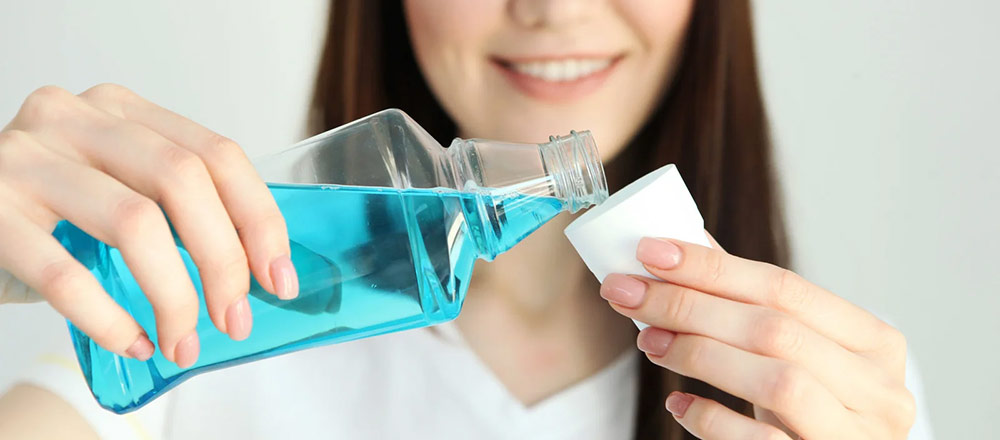
Chlorhexidine is one of the most effective antiseptics widely used in dentistry for oral care. Studies confirm that this component is superior to other active substances, such as stannous fluoride, delmopinol, alexidine and cetylpyridinium chloride, in terms of effectiveness in the fight against dental plaque. As part of mouthwashes, chlorhexidine shows significantly higher activity against microbes, which makes it indispensable for the prevention and treatment of dental diseases.
Effectiveness of chlorhexidine
Chlorhexidine has properties that allow it to actively fight a wide range of microorganisms, including bacteria and yeasts that can cause oral infections, such as candidiasis. This substance has a bactericidal and bacteriostatic effect, depending on the concentration. In low doses, chlorhexidine inhibits the growth of bacteria, disrupting their metabolism, which leads to the cessation of their reproduction. In high doses, it destroys the cell membranes of bacteria, which causes the death of microorganisms.
This antiseptic is also noted for its stability and long-lasting effect. Unlike many other antibacterial agents, chlorhexidine remains active even after the rinse has been spit out. Its cationic (positively charged) molecule binds to the negatively charged surfaces of bacteria and teeth, which ensures continued antimicrobial action for several hours after use. This allows the product to effectively inhibit the growth of bacteria even twelve hours after rinsing, providing long-term protection against plaque re-formation.
Mechanism of action
The mechanism of action of chlorhexidine (CHX) is quite interesting and unique. Chlorhexidine is a cationic (positively charged) molecule, it binds to negatively charged anions that are on the surface of bacteria and teeth, in particular on pellicles - a thin protective layers formed on enamel. 
The antibacterial action of chlorhexidine consists in the destruction of the bacterial cell membrane. Due to the cationic charge, CHX penetrates the cell wall, which increases its permeability and leads to cell lysis (destruction of the cell membrane).
Chlorhexidine can act both bacteriostatically and bactericidally, depending on the dose. In lower concentrations, it inhibits the metabolism of bacteria and their reproduction, interfering with DNA replication, which provides a bacteriostatic effect. In higher doses, chlorhexidine exhibits a bactericidal effect, completely destroying bacterial cells.
An important property of chlorhexidine is its ability to act against a wide range of microbes. It is effective against both gram-positive and gram-negative bacteria, as well as yeasts, dermatophytes, molds and lipophilic viruses. This makes it a universal remedy for fighting infections in the oral cavity.
Use of chlorhexidine in dentistry
Due to its antiseptic properties, chlorhexidine is an important component of oral care products. Dentists often prescribe it for the prevention and control of dental plaque, which is the main cause of gingivitis and other inflammatory gum diseases. In addition, it effectively helps in the treatment of already existing plaque, destroying its structure and preventing further development.
Chlorhexidine is widely used after dental procedures such as periodontal surgery, dental implants or intermaxillary fixation. Thanks to its antimicrobial properties, this tool allows you to avoid postoperative complications, preventing the development of infections and promoting rapid healing.
Chlorhexidine is also used in mouthwashes during the maintenance phase after root planing, periodontal operations and other surgical interventions. It provides reliable protection and control over the condition of the gums and teeth during the recovery period, reducing the risk of inflammation.
Long-term effect of chlorhexidine
One of the key advantages of chlorhexidine is its long-lasting antimicrobial effect. Because chlorhexidine molecules bind to the surfaces of teeth and bacteria, it continues to work even after you finish rinsing your mouth. Many antiseptics are quickly washed out or inactivated after use, but chlorhexidine retains its activity for up to twelve hours..
This means that even after the patient spits out the rinse, chlorhexidine continues to fight the microorganisms in the mouth. This long-lasting effect is particularly beneficial for patients suffering from chronic gum disease, as it provides permanent control of bacteria and prevents their re-growth.
Chlorhexidine as the gold standard
Thanks to its unique properties, chlorhexidine remains the "gold standard" in the field of oral care. It is used as a preventive measure, as well as for the treatment of various dental diseases. A range of products containing chlorhexidine, such as GUM® PAROEX®, offers professional plaque control and optimal gum health, making it indispensable for dental care.