

Question -answer
Blog Archive
- November-2016
- December-2016
- January-2017
- March-2017
- Aprill-2017
- May-2017
- June-2017
- August-2017
- September-2017
- Aprill-2018
- July-2018
- September-2018
- October-2018
- March-2020
- Aprill-2020
- May-2020
- July-2020
- October-2022
- Aprill-2023
- October-2023
- February-2024
- Aprill-2024
- May-2024
- July-2024
- August-2024
- September-2024
- November-2024
- December-2024
- January-2025
- February-2025
- March-2025
- Aprill-2025
- May-2025
- June-2025
- July-2025
- August-2025
- September-2025
- March-2026
- Aprill-2026
- June-2026
- August-2026
Для измерения артериального давления имеет значение соблюдение следующих условий.
Поза больного:
- измерение АД производится в положении «сидя»;
- измерение производится пациентом в удобном кресле или на стуле, с опорой на спинку стула, с исключением скрещивания ног;
- руку, на которой будет измеряться АД, необходимо полностью расслабить и держать неподвижно до получения результата измерения. Рука удобно расположена на столе, находящемся рядом;
- не допускается положение руки "на весу". Высота стола должна быть такой, чтобы при измерении АД середина манжеты, наложенной на плечо, находилась на уровне сердца;
- необходимо учитывать, что глубокое дыхание приводит к изменчивости АД.
Условия измерения АД:
- исключается употребление кофе и крепкого чая в течение 1 часа перед измерениями;
- не курить за 30 минут до измерения;
- измерение проводится в покое после обязательного 5 минутного отдыха. В случае если измерению АД предшествовала значительная физическая или эмоциональная нагрузка, период отдыха следует продлить до 15-30 минут;
- необходимо расслабиться и воздержаться от разговоров во время измерения;
- манжета должна быть надета согласно требованиям инструкции электронного тонометра и соответствовать окружности Вашей руки.
Согласно таблице классификации уровней артериального давления, данным Всемирной организации здравоохранения (ВОЗ), нормальным считается ситолическое давление 100-129 мм рт. ст., диастолическое 60-84 мм рт. ст.
Если в период покоя диастолическое давление выше 90 мм рт. ст., а систолическое выше 140 мм рт. ст., то такое давление считается высоким. В этом случае необходимо обратится к врачу. Если артериальное давление остается на этом уровне в течение длительного времени, это опасно для здоровья, поскольку является причиной прогрессирующего повреждения кровеносных сосудов и гипертонии.
Также необходимо обращаться к врачу, если уровень кровяного давления чересчур низок, т.е. систолическое давление ниже
Тем самым можно выявить изменения значений, и на ранней стадии отреагировать на них соответствующим образом.
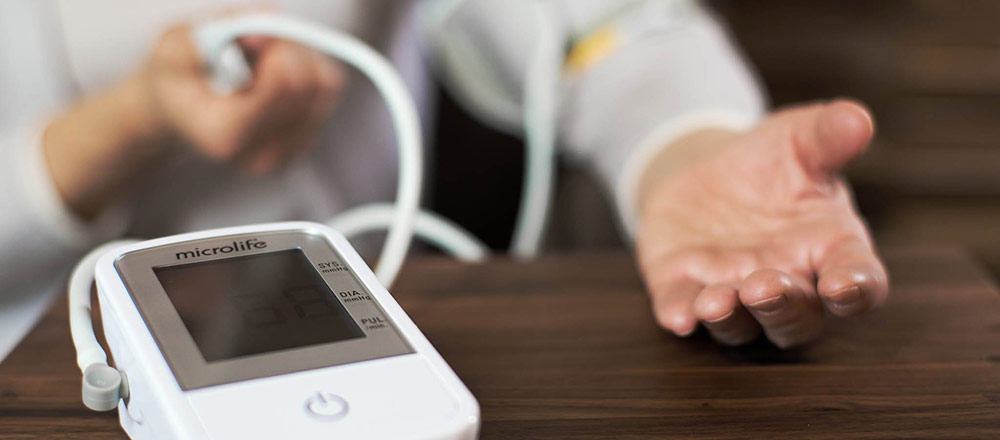
The difference between automatic and semi-automatic blood pressure monitors lies in the way air is pumped into and released from the cuff.
An automatic blood pressure monitor fully automates the process of measuring blood pressure. When using such a device, you just need to put the cuff on your arm and press a button. The monitor automatically inflates the cuff to the required level and then deflates it automatically after the measurement is completed. Many modern automatic blood pressure monitors are equipped with an "artificial intelligence" function, which accurately determines the required pressure, optimizing the process of inflation and deflation.
In a semi-automatic blood pressure monitor, part of the process is done manually. The user needs to manually inflate the cuff using a rubber bulb. After reaching the required pressure level, the measurement is performed automatically, but deflating the air from the cuff must be done manually through a special valve. This approach requires more effort and control from the user, but semi-automatic monitors are usually less expensive than automatic ones.
Thus, automatic blood pressure monitors offer greater comfort and ease of use, while semi-automatic ones require more active user involvement in the measurement process.

The main disadvantages of measuring blood pressure with a mechanical tonometer are related to several factors. Firstly, the accuracy of the measurements depends on the individual characteristics of the person conducting the procedure. Good vision, hearing, and coordination of movements ("hands – vision – hearing") are required. People with impairments in vision, hearing, or motor skills may experience difficulties using a mechanical tonometer.
The mechanical tonometer is also sensitive to external conditions such as noise in the room. External sounds can interfere with correctly hearing the heart tones through the stethoscope, affecting measurement accuracy. The accuracy also depends on the correct positioning of the stethoscope head relative to the artery. Incorrect positioning can lead to distorted results.
Additionally, the mechanical tonometer requires direct contact of the cuff and stethoscope head with the patient's skin, which can cause discomfort and increase the risk of infections with insufficient hygiene.
Another significant drawback is the technical complexity of using the device. Improper handling can lead to erroneous blood pressure readings. Accurate measurement requires special training, without which there is a high risk of incorrect procedure and interpretation of the results.
Для измерения артериального давления в настоящее время широко используются 2 метода:
1. Метод Короткова:- этот метод разработан русским хирургом Н.С.Коротковым в 1905 году, предусматривающий для измерения очень простой прибор, состоящий из механического манометра, манжеты с грушей и фонендоскопа. Метод основан на полном пережатии манжетой плечевой артерии и выслушивании тонов, возникающих при медленном выпускании воздуха из манжеты.
Этот метод применяется в основном в профессиональной медицине, так как без специального обучения допускаются погрешности в показателях.
2. Осциллометрический метод - Это метод, при котором используются электронные тонометры. Он основан на регистрации тонометром пульсаций давления воздуха, возникающих в манжете при прохождении крови через сдавленный участок артерии.
Различают два показателя артериального давления:
- Систолическое (верхнее) артериальное давление — это уровень давления крови в момент максимального сокращения сердца.
- Диастолическое (нижнее) артериальное давление — это уровень давления крови в момент максимального расслабления сердца.
Повышение давления на каждые 10 мм рт. ст. увеличивает риск развития сердечно-сосудистых заболеваний на 30%. У людей с повышенным давлением в 7 раз чаще развиваются нарушения мозгового кровообращения (инсульты), в 4 раза чаще — ишемическая болезнь сердца, в 2 раза чаще поражение сосудов ног. Именно с измерения артериального давления необходимо начинать поиск причины таких частых проявлений дискомфорта, как головная боль, слабость, головокружение. Во многих случаях за давлением необходим постоянный контроль, и измерения следует проводить по нескольку раз в день.
You do not observe the necessary time interval between measurements of 2 to 5 minutes to allow the walls of the vessels to recover.
People with cardiovascular disorders, older people may need more time.
Arterial pressure is not constant. With each stroke of the heart, the pressure changes. It also depends on the time of day, on climatic conditions and on the physical stress experienced by a person.
The reasons for the difference in the measurement results can be several:
- The state of the body at the time of measurement (stress, physical arousal, fatigue, etc.);
- Violation of the measurement technique (conversation, movement, uneven breathing, lack of necessary rest before measurement, inappropriate measurement position, taking medications, etc.);
- Absence of necessary qualification for correct measurement of arterial pressure (when measuring blood pressure by a mechanical device, the individual error can be significant - up to ± 15 mm Hg and more);
- Malfunction of the device (the device is recalibrated, did not pass the metrological verification in time).
Arterial pressure - the value is not constant. With each stroke of the heart, the pressure changes. It also depends on the time of day, on climatic conditions and on the physical stress experienced by a person.
There may be several reasons for the difference in measurement results:
- The state of the body at the time of measurement (stress, physical arousal, fatigue, etc.),
- Violation of the measurement technique (conversation, movement, uneven breathing, lack of necessary rest before measurement, incorrect measurement posture, taking medications, etc.),
- Absence of necessary qualification for correct measurement of blood pressure (when measuring blood pressure by a mechanical device, the individual error can be significant - up to ± 15 mmHg or more).
- Malfunction of the device (the device is recalibrated, did not pass the metrological verification in time)
- 1
- 2